Press & Media
Press Kit
Everything you need to cover The Beacon at Roswell or to book Jesse Marcel for an interview, podcast or talk.
Contact for Pressjesse@abstractsight.com
The Book at a Glance
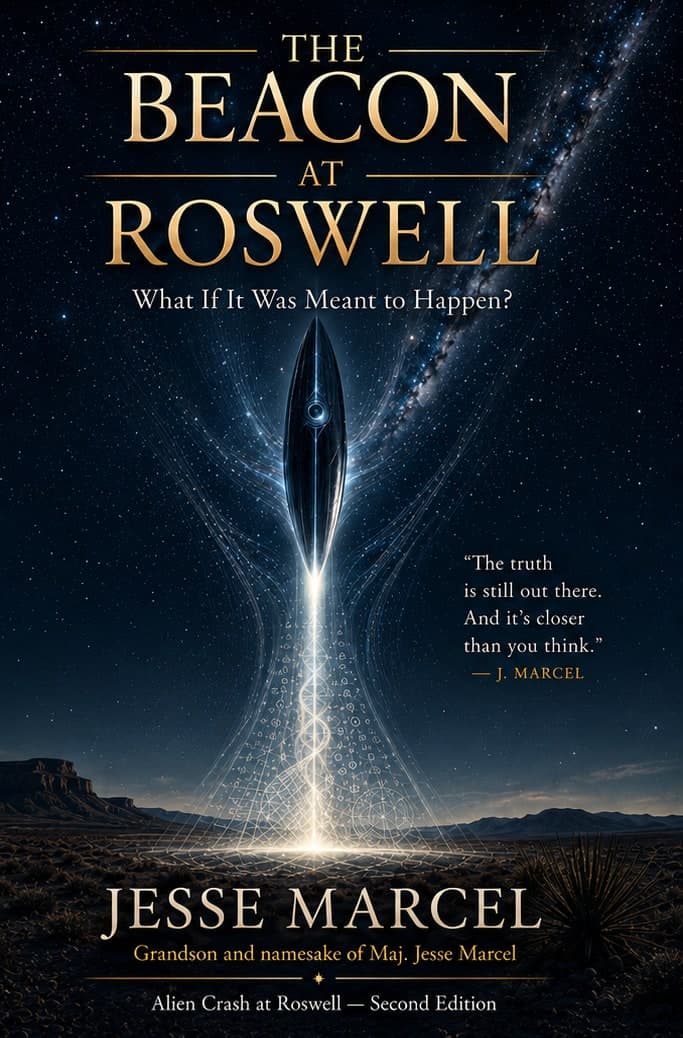
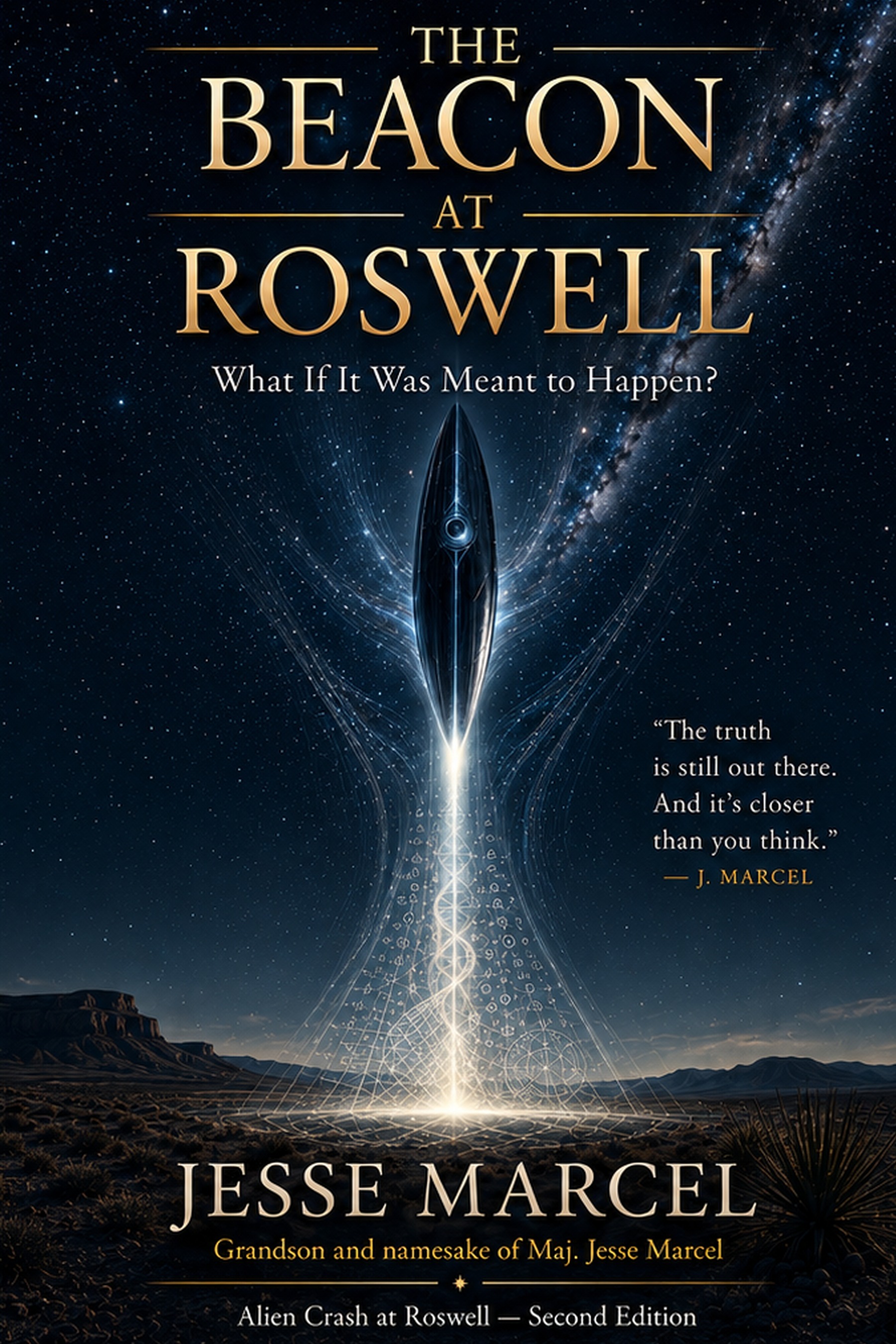
- Title
- The Beacon at Roswell: What If It Was Meant to Happen?
- Author
- Jesse Marcel (Jesse Marcel III)
- Foreword
- Johnny Mann
- Publisher
- Abstract Sight Press
- Publication date
- October 7, 2026
- Edition
- Second edition (first published as Alien Crash at Roswell)
- Paperback
- 468 pages · 6 × 9 in · ISBN 979-8-9979140-0-4 · $24.99
- eBook
- $9.99 · EPUB direct from jessemarcel.com; Kindle edition coming to Amazon
- Hardcover
- Coming soon · ISBN 979-8-9979140-1-1 · $32.99
- Signed copies
- Available only from jessemarcel.com
- Subjects
- U.S. history, 1945 to present · Memoir · UFOs
About the Book
What if the most famous crash in history was never a crash at all?
Short description
Major Jesse Marcel was the Army intelligence officer sent to recover the Roswell debris in July 1947, and he said for the rest of his life that it was not a weather balloon. His grandson lays out the evidence, then asks the question no one has asked: not what caused the crash, but whether it was meant to happen.
Long description
In July 1947 my grandfather, Major Jesse Marcel, was sent into the New Mexico desert to identify wreckage nobody could explain. He held it in his hands. The Army Air Forces had certified him as a radar intelligence officer twenty-two months earlier — he knew precisely what a weather balloon and a radar target looked like — and he said for the rest of his life that what he recovered was neither.
His grandson and namesake has spent a lifetime with the documents, the testimony, and the questions his family inherited. The Beacon at Roswell lays out the evidence: the debris, the reversal at Fort Worth, the diploma proving Marcel knew exactly what he was looking at, and the general who called him outstanding thirteen months after publicly correcting him.
Then it asks what no one has asked. Not what caused the crash, but why an object built by a civilization capable of crossing between stars would break apart over a sheep ranch at all. Not unless arriving in pieces was the point.
Drawing on radar training records, a coded diary, the symbols his father described, and eighty years of accumulated testimony, Jesse Marcel argues that Roswell was not an accident but a deliberate act — a message left for a civilization that would not be ready to read it for a very long time.
Eighty years on, he believes we are only now becoming the civilization that could.
About the Author
Short bio
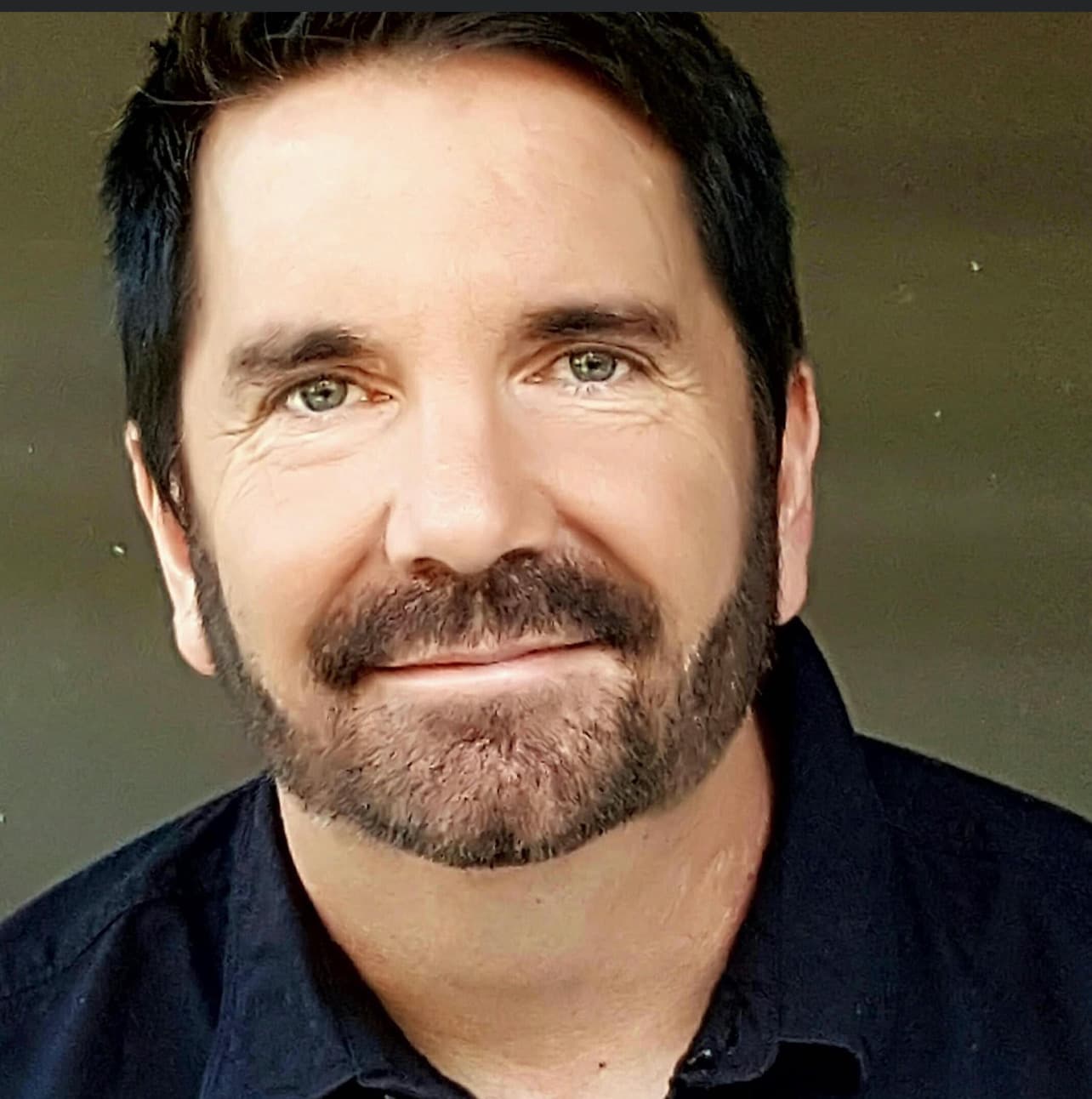
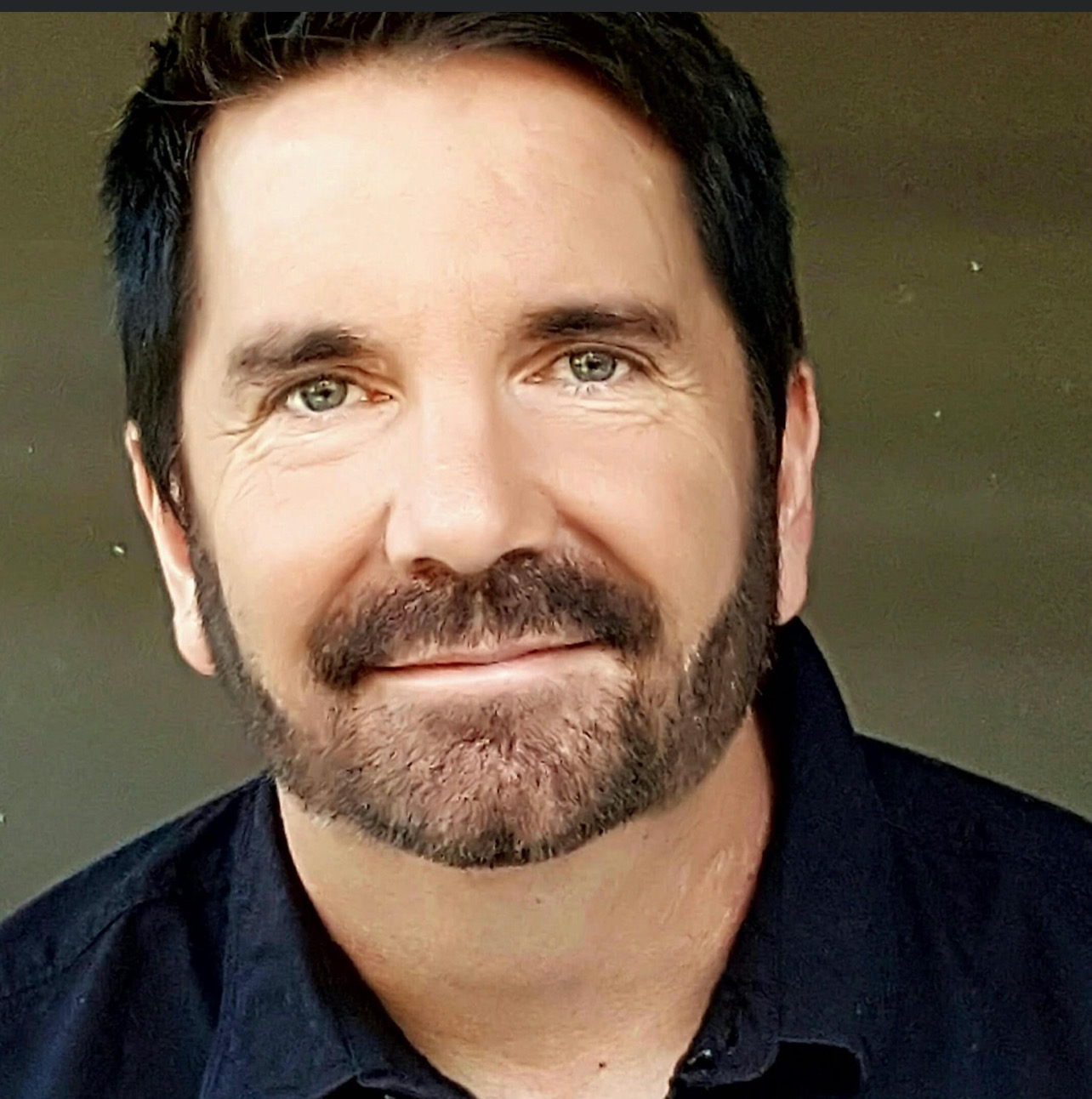
Jesse Marcel is the grandson and namesake of Major Jesse Marcel, the intelligence officer who investigated the 1947 Roswell debris field.
Long bio
Jesse Marcel III is the grandson and namesake of Major Jesse Marcel, the Army Air Forces intelligence officer who recovered and examined the debris found outside Roswell, New Mexico, in July 1947. He grew up inside the story: his father, Jesse Marcel Jr., handled the material as an eleven-year-old boy on the family's kitchen floor. He has spent his life with the documents, the testimony, and the questions three generations of his family inherited. The Beacon at Roswell is the second edition of his account, rebuilt around a single question no one had thought to ask.
Foreword
Johnny Mann is a former United States Air Force cartographer and an award-winning television feature reporter. In 1980 he interviewed Major Jesse Marcel in the Roswell kitchen where the debris was spread out in 1947.
Roswell, 1947: Key Dates
As given in The Beacon at Roswell. “First Edition” marks a date the book takes from its First Edition chronology.
- 8 Sept 1945Major Jesse Marcel completes radar training at Langley Field and is certified as a Radar Intelligence Officer.
- Night of July 2, 1947A violent storm; rancher Mac Brazel hears an explosion. (Some accounts say July 4; the book makes its case for July 2.)
- July 6, 1947Brazel brings debris to Sheriff George Wilcox in Roswell, who contacts the base. (First Edition)
- July 7, 1947Major Marcel brings debris home; his son, Jesse Marcel Jr., 11, sees it on the kitchen floor.
- July 8, 1947The 509th Bomb Group announces it has recovered a “flying disc.” Within hours, General Roger Ramey says it was a weather balloon.
- 19 Aug 1948Ramey signs an endorsement calling Major Marcel’s services “outstanding.”
- 1980TV reporter Johnny Mann, who wrote the book’s foreword, films Major Marcel in the 1947 Roswell kitchen.
- January 1997Jesse Marcel Jr. describes the symbols in a three-day, videotaped memory retrieval.
Suggested Interview Questions
- Your grandfather was certified as a radar intelligence officer twenty-two months before Roswell. Why does that matter?
- Your father saw the debris on the kitchen floor when he was eleven. What did he remember, and what did he say about the symbols?
- On July 8, 1947, the Army announced a flying disc, and within hours a weather balloon. What happened in between?
- Thirteen months after Fort Worth, the same general called your grandfather “outstanding.” What does that tell you, and what doesn’t it?
- Project Mogul is the official explanation. Why don’t you find it sufficient?
- Your book separates what is documented from what is testimony. How do you draw that line?
- Why ask why it crashed, rather than what it was?
- What changed between Alien Crash at Roswell and this second edition?
Images
Press & Speaking
For interviews, podcasts, review copies and speaking, write to jesse@abstractsight.com or use the contact page.